How the Brain Automates Thoughts and Decisions? You don’t think nearly as much as you think you do.
That’s not an insult.
That’s biology.
Most of your thoughts, reactions, decisions-even your desires-are automated. Pre-coded. Rehearsed below conscious awareness.
And if you’ve ever wondered why you keep looping the same patterns…
Why you know what to do but don’t do it…
Why your life reflects habits you didn’t consciously choose…
This is where we start.
Because understanding how the brain automates thoughts and decisions isn’t just interesting.
It’s the doorway to changing your identity.
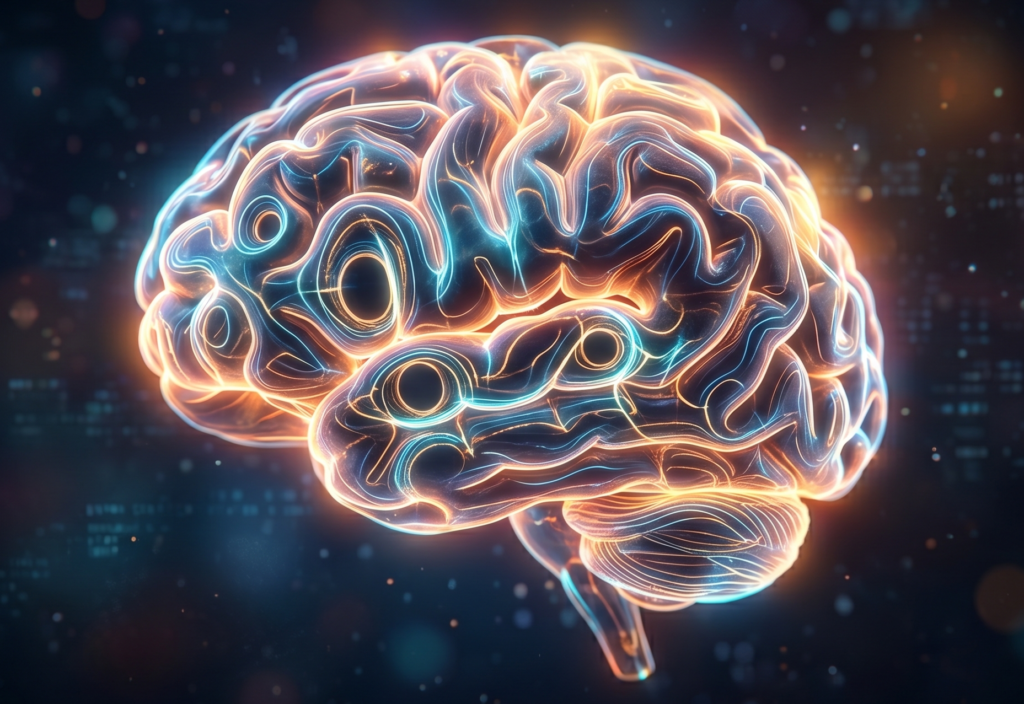
The Brain Is Built for Efficiency, Not Expansion
Your brain doesn’t wake up asking, “How can I help her evolve today?”
It asks:
“How can I conserve energy and keep her safe?”
That’s it.
The human brain is wired to automate anything it repeats-thoughts, behaviors, emotional responses-so it doesn’t have to keep re-deciding.
This is called neural efficiency.
It’s why you can brush your teeth without thinking.
Drive without remembering the last five minutes.
React emotionally before logic even enters the room.
Automation is a survival feature.
But here’s the tension:
What kept you safe in the past
is now silently shaping your present.
How the Brain Automates Thoughts and Decisions (On Repeat)
Let’s break this down in real-life terms.
Every time you experience something, your brain encodes:
- What happened
- What it meant
- How you felt
- What you did next
Then it stores that pattern.
Do it enough times, and the brain creates a shortcut-a neural pathway.
Now instead of evaluating each situation fresh, your brain runs the pattern automatically.
Same trigger → same thought → same emotion → same action.
That’s automation.
Not because it’s true.
But because it’s familiar.
And familiarity, to the brain, equals safety.
Your Identity Is Built on Automated Thought Loops
This is the part most people miss.
Your identity isn’t just who you think you are.
It’s who your brain has automated you to be.
If your internal loops sound like:
- “I always mess this up”
- “People don’t really support me”
- “I need to work harder to deserve more”
That’s not random thinking.
That’s conditioned identity.
Your brain has practiced those thoughts so many times
they now run without permission.
And because thoughts create emotions…
and emotions drive behavior…
You don’t just think this identity.
You live it.
The Nervous System Locks It In
Here’s where it gets deeper.
Your brain doesn’t automate alone.
Your nervous system reinforces everything.
If a thought pattern is paired with a strong emotional experience-stress, fear, rejection, pressure- it becomes even more deeply encoded.
This is why logic alone doesn’t change your patterns.
You can know something new intellectually…
But if your body doesn’t feel safe holding it,
you’ll default back to what’s familiar.
This is the loop:
Thought → Emotion → Body Response → Reinforced Thought
And now it’s not just mental.
It’s physiological.
Why You Keep Repeating Patterns You’ve “Outgrown”
You’ve probably had moments where you’ve said:
“I’ve already worked through this. Why is it still happening?”
Because awareness doesn’t equal rewiring.
Your brain automates based on repetition-not insight.
You can have a breakthrough in the morning
and still default to old behavior by evening.
Not because you’re inconsistent.
Because your nervous system hasn’t caught up to your awareness.
Change doesn’t happen when you realize something.
It happens when you rehearse something new enough times that it becomes automatic.
Mid-Point Reset: Interrupting the Pattern
Here’s where your power comes back online.
If your brain learned automation through repetition…
it can unlearn it the same way.
But not through force.
Through intentional pattern interruption.
Start here:
- Notice the thought as it happens
- Name it without judgment
- Pause the reaction
- Choose a new response (even if it feels unnatural)
This is not about perfection.
It’s about creating a crack in the loop.
Because every time you interrupt the automatic response,
you weaken the old pathway and begin forming a new one.
If you’re ready to stop living on autopilot and actually rewire how your mind and body respond to life, this is the work.
Not surface-level mindset shifts.
Identity-level change.
Stay with this. This is where things start to move.

Rewiring Requires Emotional Safety, Not Pressure
Here’s the truth most high-achieving women resist:
You don’t rewire your brain by pushing harder.
You rewire it by feeling safer.
Because your brain will not adopt new patterns that feel threatening to your system-even if they’re “better.”
So if wealth feels unsafe…
visibility feels unsafe…
rest feels unsafe…
Your brain will automate you away from them.
Not because you don’t want them.
But because your system doesn’t trust them yet.
Rewiring means:
- Slowing down enough to notice patterns
- Regulating your nervous system
- Repeating new thoughts in a safe emotional state
- Letting your body catch up to your desires
This is how automation changes.
Becoming the Woman Who Thinks Differently (Without Forcing It)
You don’t need to control every thought.
That’s exhausting-and unrealistic.
The goal is to become someone whose default thoughts support her life.
That happens when:
- You consciously choose new beliefs
- You embody them through repeated action
- You regulate your emotional response along the way
Eventually, the new thought isn’t effort anymore.
It’s automatic.
Just like the old one used to be.
That’s identity rewiring.
What This Means for Your Life (Practically)
If your brain automates thoughts and decisions…
Then your results are largely automated too.
Your income.
Your relationships.
Your energy levels.
Your boundaries.
Not fixed.
But patterned.
And patterns can be changed.
Not overnight.
But absolutely.
FAQ: How the Brain Automates Thoughts and Decisions
1. Why does the brain automate thoughts?
To conserve energy and increase efficiency. Automation allows the brain to process information quickly without re-evaluating every situation.
2. Can automated thoughts be changed?
Yes. Through repetition, awareness, and nervous system regulation, new neural pathways can replace old patterns.
3. How long does it take to rewire thought patterns?
It varies, but consistent repetition over weeks to months is typically required to form stable new patterns.
4. Why do I go back to old habits even after mindset work?
Because your nervous system still associates the old pattern with safety. Rewiring requires emotional as well as cognitive change.
5. Is overthinking the same as automated thinking?
Not exactly. Overthinking is often a conscious loop, while automated thinking happens subconsciously and instantly.
Conclusion: You’re Not Stuck-You’re Patterned
This isn’t about something being wrong with you.
It’s about something being practiced.
Your brain automates what it repeats.
So if your current life feels misaligned, limited, or frustrating…
It’s not permanent.
It’s programmable.
And the moment you understand how the brain automates thoughts and decisions—
you stop taking your patterns personally.
You start working with them.
Rewiring them.
Choosing, slowly and intentionally, who you become next.
If you’re ready to shift from unconscious patterns to conscious power, this is your work now.
Not hustling harder.
Not fixing yourself.
But rewiring the identity that’s been running on autopilot.
And building one that actually supports the life you want.
Read More:
How Your Brain Builds Your Identity (And Why It Feels So Hard to Change)
Wealth Identity Frequency Explained: Why You Can’t Outgrow the Identity You Haven’t Rewired
What Is Subconscious Identity Work & Why It Matters (If You’re Done Starting Over)
How Subconscious Patterns Control Your Behavior Guide 2026
How Brain Rewiring Actually Works (Neuroscience Explained)
Expand Wealth Capacity Without Fear: The Nervous System Shift That Changes Everything
The Invisible Cost of Success Without Boundaries
Signs You’re Still Running on Survival Energy (Even If You’re Successful)
Why You’re Not Stuck: How Subconscious Identity Work Unlocks Success & Wealth
Why High-Achieving Women Feel Capped — And How Subconscious Identity Work Unlocks Growth