Stress is often treated as a mental problem. In reality, it is primarily a biological process.
Your brain constantly scans your environment for signs of safety or danger. Long before you’re consciously aware of feeling anxious, neural circuits have already begun preparing your body to either fight, flee, or freeze. This automatic response has helped humans survive for thousands of years-but in modern life, it can become chronically activated.
Understanding the neuroscience behind calming the nervous system changes the conversation from “just relax” to “understand how your brain works.” Rather than relying on willpower, neuroscience offers practical ways to influence the brain-body connection and restore physiological balance.
This article explores how the nervous system functions, why chronic stress persists, and what research tells us about effectively calming the nervous system.
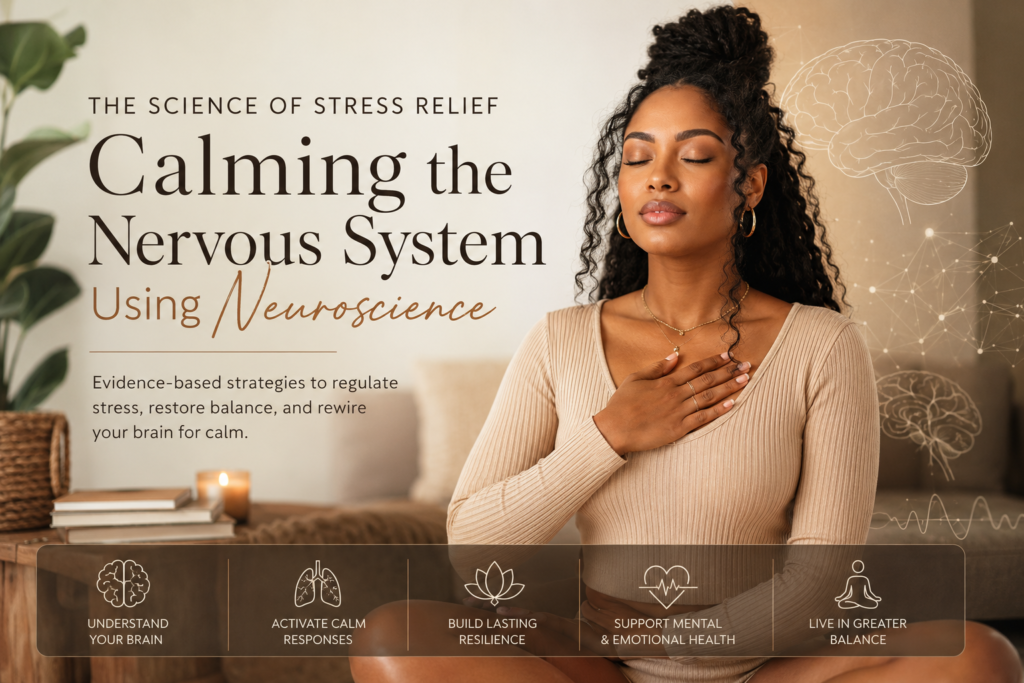
Understanding the Nervous System
The human nervous system is an intricate communication network made up of the brain, spinal cord, and billions of nerve cells. Its primary role is to gather information, process it, and coordinate responses throughout the body.
For stress regulation, the autonomic nervous system is especially important. It has two major branches:
- Sympathetic nervous system: Activates the body’s stress response, increasing heart rate, blood pressure, and alertness.
- Parasympathetic nervous system: Promotes recovery, digestion, healing, and restoration after stress.
Healthy nervous system function depends on flexibility-not remaining permanently in either state.
When discussing calming the nervous system, the objective is not eliminating stress altogether. Instead, it is improving the nervous system’s ability to return to baseline after a stressful event.
The Neuroscience of the Stress Response
When the brain detects a potential threat, the amygdala rapidly signals the hypothalamus, initiating a cascade involving the sympathetic nervous system and the hypothalamic-pituitary-adrenal (HPA) axis.
Stress hormones such as adrenaline and cortisol are released, leading to:
- Increased heart rate
- Faster breathing
- Elevated blood glucose
- Heightened muscle tension
- Narrowed attention
These adaptations are beneficial during genuine emergencies.
Problems arise when this response becomes chronic due to ongoing psychological stress, poor sleep, excessive workload, unresolved trauma, or constant digital stimulation.
Over time, persistent activation can contribute to:
- Anxiety disorders
- Depression
- Hypertension
- Impaired immune function
- Digestive disturbances
- Reduced cognitive performance
Modern neuroscience increasingly recognizes chronic stress as a state of altered neural regulation rather than simply an emotional experience.
Neuroplasticity: Why the Brain Can Learn Safety
One of neuroscience’s most encouraging discoveries is neuroplasticity, the brain’s ability to reorganize itself by forming new neural connections.
Repeated experiences strengthen specific neural pathways.
If the brain repeatedly experiences chronic stress, fear circuits become more efficient.
Conversely, repeated experiences of safety strengthen neural networks associated with emotional regulation and executive control.
This means calming the nervous system is not merely about temporary relaxation. Consistent practice literally reshapes brain circuitry over time.
Neuroplasticity explains why evidence-based stress management techniques become more effective with regular repetition.
Evidence-Based Methods for Calming the Nervous System
1. Controlled Breathing
Slow diaphragmatic breathing stimulates the vagus nerve, one of the primary pathways of the parasympathetic nervous system.
Research demonstrates that slower breathing can:
- Lower heart rate
- Reduce cortisol
- Improve emotional regulation
- Enhance heart rate variability (HRV)
A common protocol involves inhaling for four seconds and exhaling for six seconds, emphasizing longer exhalations.
2. Physical Exercise
Movement serves as an effective regulator of the nervous system.
Exercise:
- Increases brain-derived neurotrophic factor (BDNF)
- Supports neuroplasticity
- Lowers stress hormones
- Improves mood through neurotransmitter release
Walking, resistance training, cycling, and swimming all contribute to long-term nervous system resilience.
3. Quality Sleep
Sleep is essential for neural restoration.
During sleep, the brain:
- Consolidates memories
- Removes metabolic waste
- Restores neurotransmitter balance
- Regulates emotional processing
Even modest sleep deprivation increases amygdala activity while reducing prefrontal cortex regulation, making emotional responses more intense.
Improving sleep quality is one of the most powerful interventions for calming the nervous system.
4. Mindfulness Meditation
Brain imaging studies consistently show that long-term mindfulness practice strengthens regions associated with attention, emotional regulation, and self-awareness.
Regular meditation has been linked with:
- Reduced amygdala activation
- Improved prefrontal cortex function
- Lower perceived stress
- Better emotional flexibility
Even ten minutes daily may produce measurable improvements over time.
5. Social Connection
Humans are biologically wired for connection.
Positive social interaction increases oxytocin while dampening stress responses.
Supportive relationships communicate safety to the nervous system in ways that isolated coping strategies cannot fully replace.
Healthy connection is therefore a neurological intervention-not simply an emotional one.

The Role of the Vagus Nerve
The vagus nerve is central to parasympathetic regulation.
It connects the brain with multiple organs, including the heart, lungs, and digestive system.
Higher vagal tone has been associated with:
- Better emotional regulation
- Improved cardiovascular health
- Greater resilience
- Faster recovery from stress
Common methods that may stimulate vagal activity include:
- Slow breathing
- Singing
- Humming
- Gentle yoga
- Meditation
- Cold water exposure (used cautiously)
Although interest in vagus nerve stimulation has grown rapidly, natural lifestyle interventions remain the first-line approach for most healthy individuals.
Why Quick Fixes Often Fail
Many stress management approaches promise immediate relief.
However, neuroscience demonstrates that durable change depends on repetition rather than intensity.
The brain modifies its circuitry through consistent experiences.
Small daily practices accumulate into meaningful neurological adaptations.
Instead of searching for one perfect solution, think of calming the nervous system as gradually training the brain toward greater flexibility and resilience.
Want to build a more resilient brain? Start with one evidence-based practice today-whether it’s five minutes of diaphragmatic breathing, a daily walk, or a consistent sleep routine. Small actions repeated consistently create lasting neurological change.
Lifestyle Habits That Support Long-Term Nervous System Health
Neuroscience consistently points toward foundational lifestyle habits rather than miracle solutions.
These include:
- Regular physical activity
- Consistent sleep schedule
- Balanced nutrition
- Limiting excessive alcohol and stimulants
- Spending time in nature
- Maintaining meaningful relationships
- Practicing mindfulness
- Managing workload and recovery
These behaviors work together to improve overall nervous system regulation.
Frequently Asked Questions
What is the fastest way to calm the nervous system?
Slow diaphragmatic breathing with extended exhalations is among the fastest evidence-supported techniques for activating the parasympathetic nervous system.
Can chronic stress permanently damage the brain?
Chronic stress can alter brain structure and function, but neuroplasticity allows many changes to improve with sustained healthy interventions.
How long does it take to regulate the nervous system?
Some techniques produce immediate physiological effects, while lasting improvements typically develop over weeks or months of consistent practice.
Does meditation physically change the brain?
Research suggests long-term meditation can strengthen neural networks involved in attention, emotional regulation, and self-awareness.
Is exercise good for calming the nervous system?
Yes. Regular exercise improves stress resilience, supports neuroplasticity, and enhances mood-regulating neurotransmitters.
Conclusion
Understanding calming the nervous system through neuroscience shifts stress management from guesswork to evidence-based practice.
The brain is not fixed. Neural pathways continuously adapt based on experience.
Every slow breath, restorative night’s sleep, meaningful conversation, mindful moment, and regular exercise session provides biological signals that reinforce safety instead of threat.
Lasting resilience is not created through avoiding stress altogether. It develops through strengthening the brain’s remarkable ability to recover, regulate, and adapt.
The science is clear: the nervous system is trainable, and every intentional practice helps build a healthier, more resilient brain.
If you found this guide helpful, explore more neuroscience-based articles on stress resilience, emotional regulation, and brain health. Building a calmer nervous system starts with understanding how your brain works—and applying that knowledge consistently.
Read More:
How to Shift From Scarcity to Abundance Daily (Without Forcing Positive Thinking)
The Neuroscience of Deep Focus and Flow State: Why Your Brain Craves Undistracted Work
How the Brain Learns New Skills Faster (And Why Most People Learn the Hard Way)
Why Your Attention Span Is Shrinking: The Surprising Brain Science Behind Constant Distraction
Why Motivation Fails and Habits Win: The Real Secret to Sustainable Success
Breaking Habits Using Brain Science (Not Willpower)
How the Brain Builds Habits Automatically: The Hidden Neuroscience Behind Everyday Behavior